
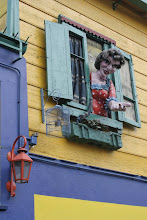
The city is like a window where everything is transparent and in exhibition. Public space is exposition and exhibition space - in the double sense - to make oneself visible and put oneself to risk.
The public space is, by definition, the kingdom of diversity. In this crossroad of differences are born both forms of acceptance and resistence based on the way you observe and watch and whether or not to trust the others. A great part of the important things we´ve learned doesn´t come from home, school or the TV. It comes from the street.
 A public space is a space accessible to everyone. Restrictions, predudices, exclusions create exceptions, amputating the character of public space. Therefore the quality of democracy is reflected in the accessability to public space. This is the thesis of Manuel Delgado, spanish anthropologist at the University of Barcelona. Buenos Aires made him optimistic.
 Difference is necessary because difference means information and information is comunication. We wouldn´t have neither information nor comunication without differences. The city works because we are able to be indifferent to one another. What makes co-existense possible in public space is not respect for difference, rather the recognition of the right to be indifferent. The others do not bother about me and I do not bother about them. My presence in public space does not require any explanation.
 Aristoteles taught that the city was made from multiple voices, while Richard Sennet says that the modern city is the space where the foreign and strange meet. Are todays cities a place for diversity? By definition the cities are heterogenous, Delgado says. Not because they want to, nor for reasons of ethics or esthetics, simply because the city needs diversity to survive, not to mention prosper.
The golden dream of a street without conflicts, where an illusionary middle class strolls happily only occurs in the
 magazines of urbanism. For reasons of sexuality, religion or appearance some have to hide. Going out in the streets represents a risk.
Magic happens when different worlds touch and mingle. El subte, where a million people pass every day is a place where this can happen, where religion meets sexuality meets class meets illness.
These contrasting meetings, exotic, apparently extravagant with a frequency linked to ritual and magic manifest themselves in any slits in urban life. This way you can encounter much more chamanism than in the jungle.
The city of bodies, lookers and onlookers is felt in el subte, bodies touch, glances meet and attention is fixed. The world of el subte is full of experiences like this. But our looks are stigmatizing. Women are prey to these looks. For women public space is different than for men. A single women in the street is an anomaly. She ought to be waiting for somebody. Womens conquest of the streets is through shopping. As a shopper she owns the streets and the public spaces.

No comments:
Post a Comment